Who Zora Neale Hurston was
Zora Neale Hurston (1891–1960) was a novelist, folklorist, and anthropologist and one of the defining writers of the Harlem Renaissance. She was born in Notasulga, Alabama, and raised in Eatonville, Florida—the first town in the United States incorporated by Black residents, chartered on August 15, 1887. Trained in anthropology at Barnard College, she spent years collecting Black Southern folklore and returned to Eatonville again and again as both subject and source.
She died in Fort Pierce, Florida, in 1960 and was buried in an unmarked grave. Alice Walker’s 1975 essay “In Search of Zora Neale Hurston” helped return her work to readers, and her novels have been in print and on syllabi ever since.
Why Eatonville mattered to her writing
Hurston grew up in a town where Black people held the offices, ran the stores, preached the sermons, and told the stories. That is why her characters are not written as problems to be solved. They argue on porches, court each other, build businesses, and fail and try again. Eatonville is not a backdrop in her work—it is the proof that self-government and Black ordinary life were already real, decades before the rest of the country was willing to say so.
That is also why 1887 First exists. Our name is the year Eatonville incorporated. We report on the land, the money, and the decisions shaping the same square mile Hurston wrote about.
Five works to start with
Jonah's Gourd Vine (1934)
Her first novel, drawn from her parents' lives in Eatonville.
Mules and Men (1935)
Folklore she collected across Florida and Louisiana, opening in Eatonville.
Their Eyes Were Watching God (1937)
Her best-known novel, set largely in the all-Black town she grew up in.
Dust Tracks on a Road (1942)
Her autobiography.
Barracoon (2018)
Her 1931 interviews with Cudjo Lewis, published decades after her death.
How to experience Hurston’s Eatonville
The Zora Neale Hurston National Museum of Fine Arts
Known locally as The Hurston, the museum on East Kennedy Boulevard shows work by artists of African descent and anchors Hurston's memory in the town itself.
The ZORA! Festival
An annual winter festival of the arts and humanities produced by the Association to Preserve the Eatonville Community (P.E.C.), drawing visitors to Eatonville from across the country.
The Robert Hungerford property
The historic school campus founded in 1889 that Eatonville residents have fought to keep in community hands — the land fight that 1887 First was built around.
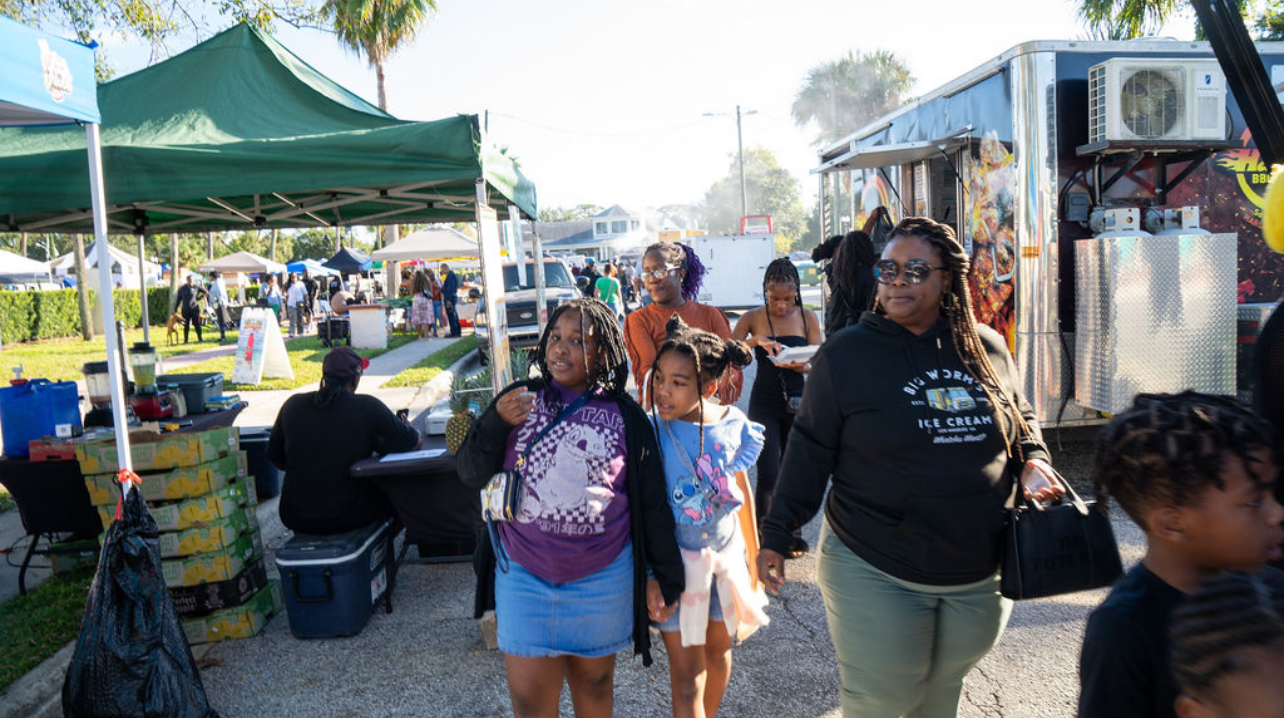
The 1887 Night Market
The living version of the commerce Hurston described: Black-owned businesses, music, food, and neighbors on the same streets she wrote about.
Hours and dates change year to year. Check with each organization before you travel, and see the 1887 Night Market schedule if you want to visit on a night the town is full.
Honoring her means protecting the town
Eatonville’s name gets invoked often. What the town needs is not only celebration but land kept in community hands, businesses that can grow here, and reporting that follows the decisions being made about its future.